

National Antivisection Society
COVID-19 experiments despite humane alternatives
Posted: 12 July 2021. Updated: 22 April 2022
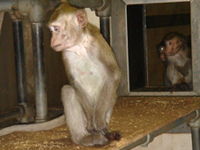
Animals continue to die in unnecessary COVID-19 experiments despite the growing availabilities of human clinical studies and humane methods.
To speed up the development of vaccines, the International Coalition of Medicines Regulatory Authorities (ICMRA) cut requirements of animal testing for efficacy (effectiveness) before proceeding to human clinical trials. An estimated million animals die in these type of tests every year. Despite the ICMRA ruling, Oxford University tested its COVID-19 vaccine in monkeys and the results demonstrated exactly why these tests can be dropped. The vaccine failed to stop the virus in monkeys, but human trials were expanded and the vaccine has now been given to millions of people.
But it has not stopped the animal experimenters.
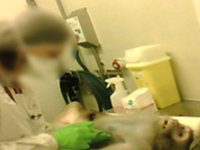
Researchers in China infected three species of monkey and identified rhesus macaques as the “most suitable” for COVID-19 experiments. But even in these the infection is not consistent with the aggressive inflammatory response (’cytokine storm’) linked to death in human patients.
Twelve monkeys at the Biomedical Primate Research Center - previously investigated by ADI - were used to test COVID-19 vaccine candidates. Monkeys were exposed to the virus, monitored, and then killed for examination. The study found NO evidence of virus-induced disease in any of the monkeys’ lungs. Dozens of monkeys were used elsewhere in COVID-19 antibody research - despite extensive human trials finding no convincing evidence on the method’s efficacy.
A sophisticated human model has already been developed using lung stem cells, allowing researchers to investigate the response to SARS-Cov-2. This along with data from human patients and volunteers is what is needed - rather than scientifically unreliable animal models.

How you can help end wasteful experiments
- Ask your MP to call on the UK Government to progress the adoption of advanced non-animal research methods and phase out animal tests.
- Support our work to promote modern non-animal methods to replace the use of animals. Donate here.


